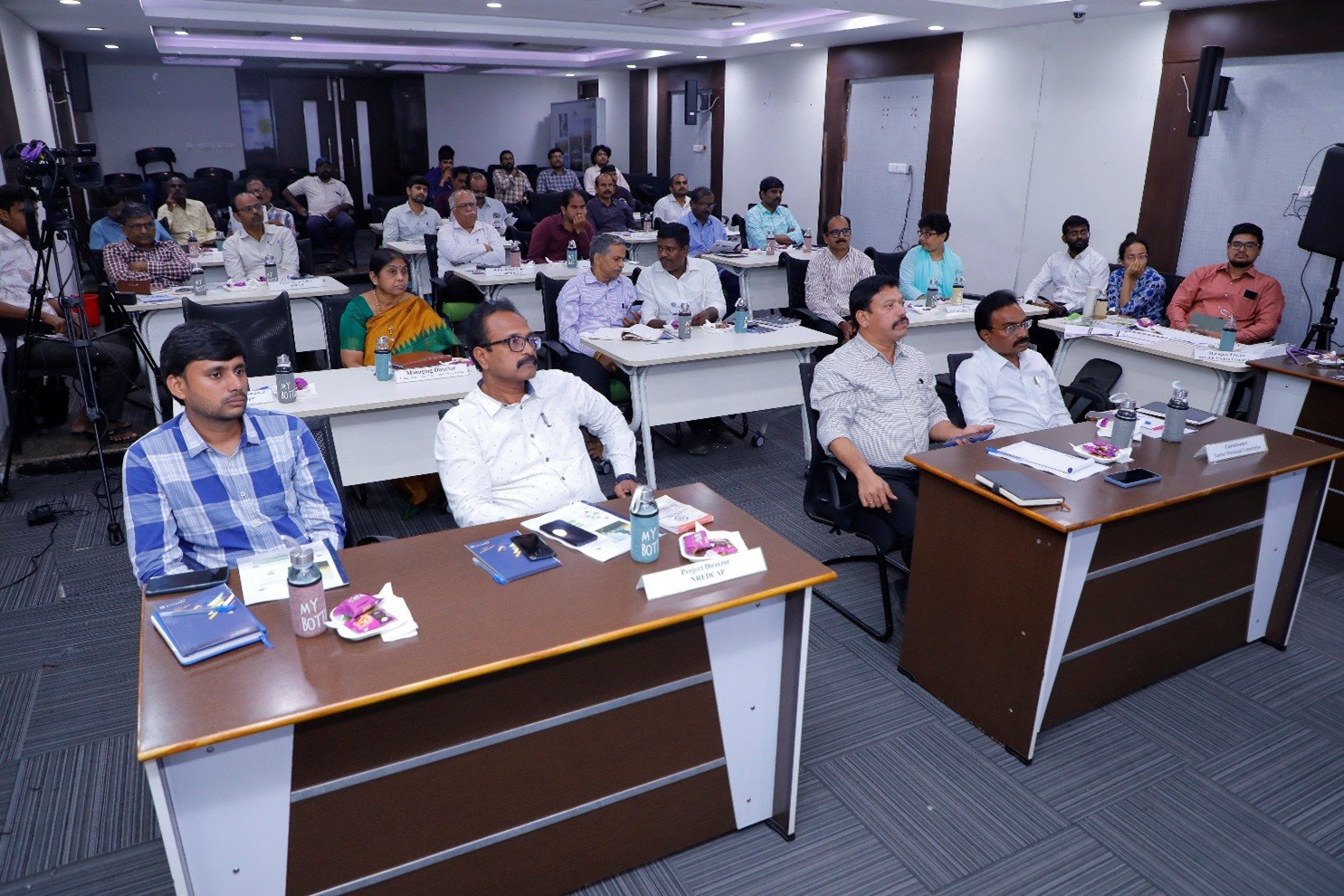
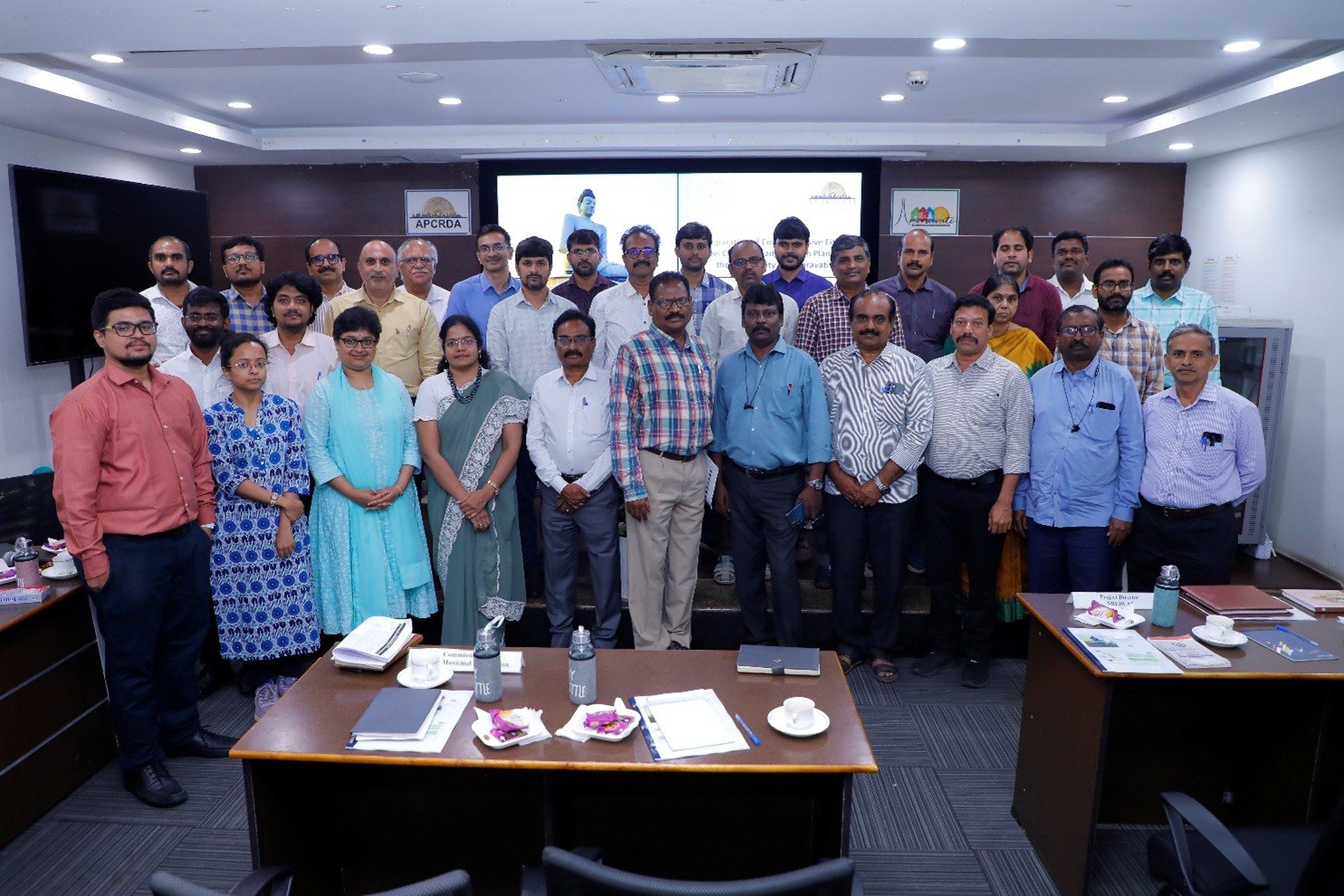
ICLEI South Asia, in collaboration with the Andhra Pradesh Capital Region Development Authority (APCRDA), convened a joint stakeholder consultation in Amaravati, Andhra Pradesh, on 25 September 2025, on Amaravati’s Climate Change Action Plan (CCAP).
ICLEI South Asia has been engaged by APCRDA to provide technical services for developing Amaravati’s CCAP. The aim is to build the new capital city of Amaravati as a model sustainable, low-carbon, and climate-resilient urban space. The CCAP provides a foundation that prioritises energy-efficient buildings and utilities, renewable energy integration, zero-emission mobility and electrification of transport, efficient resource management, extensive green spaces, and nature-based solutions to ensure sustainable urban growth and climate resilience in Amaravati.
The meeting brought together 30 participants across 13 institutions, including state institutions, city planners, and technical experts, to deliberate on shaping a net-zero, climate-smart, and eco-friendly greenfield capital city. This was a follow-up to an online meeting held earlier in September 2025 as a part of the CCAP.
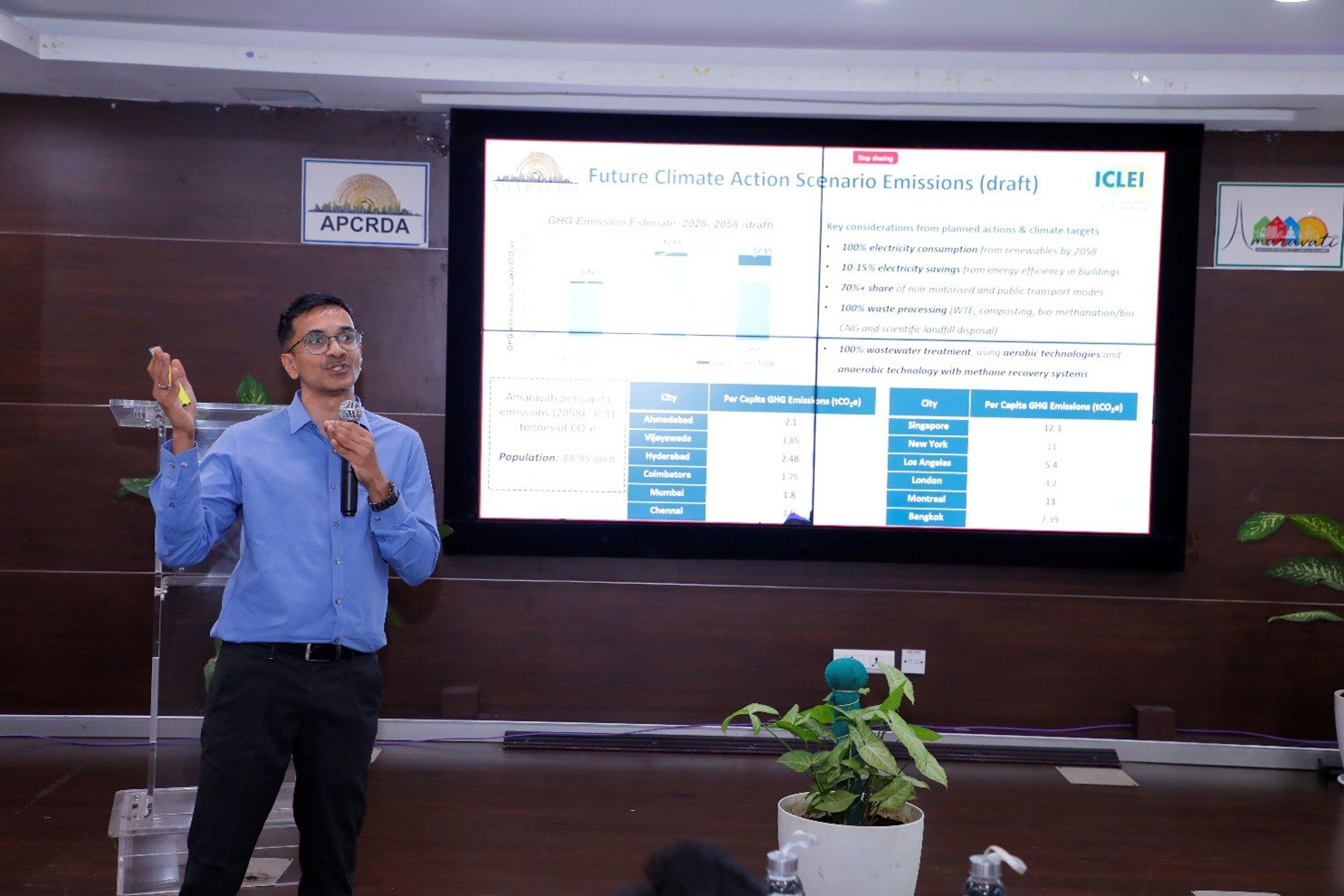
The ICLEI South Asia team provided an overview of the activities and progress of Amaravati’s CCAP, starting with the comprehensive review and synthesis of Amaravati’s Master Plan, regional/infrastructure plans, zoning regulations, and draft urban design guidelines undertaken to align the city’s development with sustainability and resilience objectives.
A detailed analysis of baseline infrastructure, climate risks, and the impacts on urban systems to identify vulnerabilities and opportunities for improvement was done. Strategic climate mitigation and adaptation actions were identified and targets set across nine key urban sectors, including energy and buildings, water supply, wastewater, stormwater, solid waste management, transportation, urban greening and biodiversity, health, and air quality.
The team highlighted Amaravati’s vision for a compact, mixed-use urban design with 30% of its area dedicated to green and blue spaces to enhance walkability and livability. With increasing temperatures and rainfall intensity, there is an indispensable need for resilient infrastructure. With a growing population, the use of electricity is also expected to increase per capita GHG emissions. To mitigate impacts, the city aims to adopt renewables, energy-efficient and green buildings, non-motorised transport, and sustainable waste management. Strategies and targets include achieving 100% renewable energy for utilities, ensuring rainwater harvesting in all buildings, reusing 50% of treated water, implementing nature-based stormwater solutions, decentralised waste systems, electric mobility, and establishing protocols for heat resilience, early warning, and pollution control.
In this final consultation, ICLEI South Asia sought more detailed feedback on each sector to finalise the Amaravati Climate Change Action Plan.
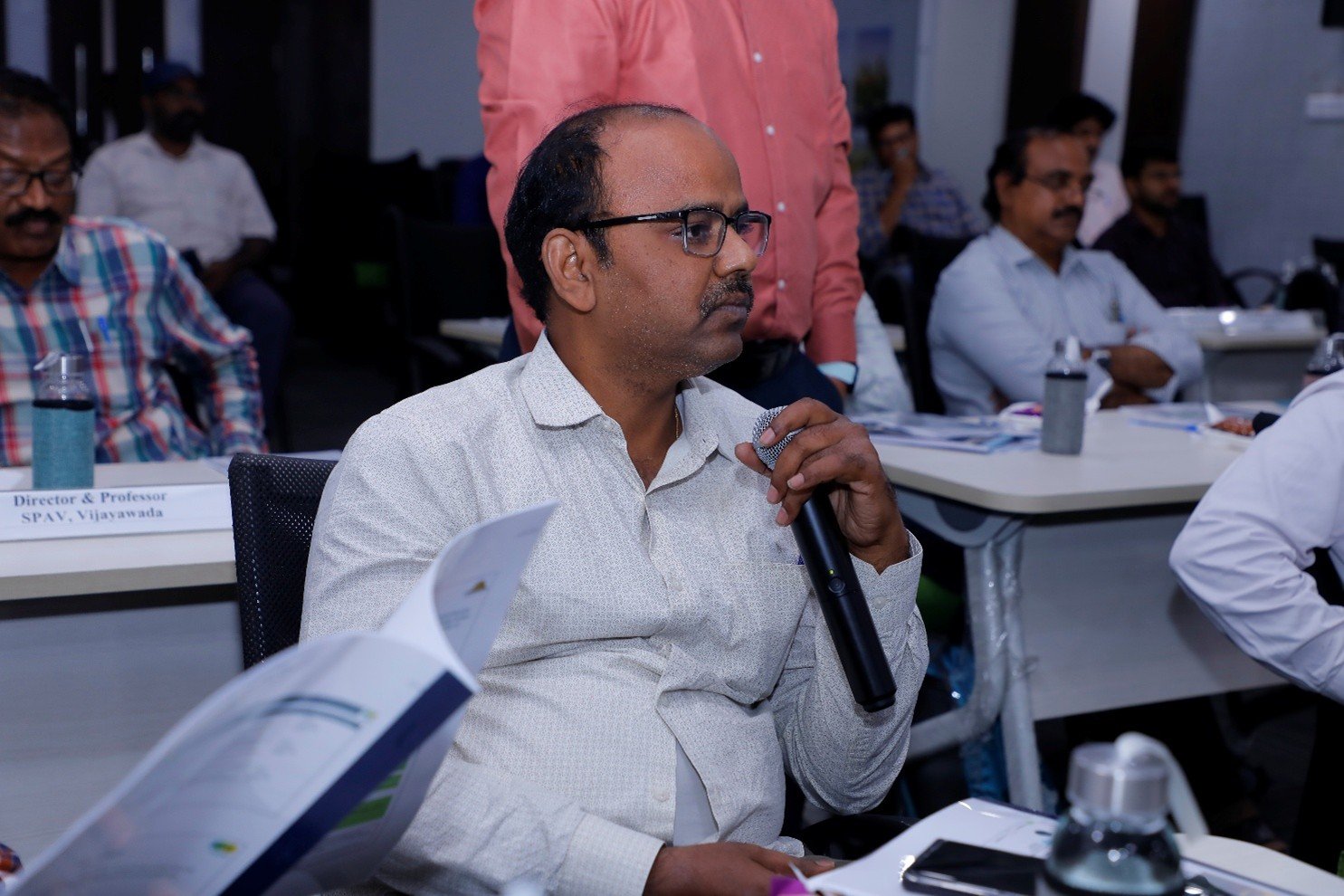
Stakeholders shared critical sectoral inputs—ranging from enabling policies and opportunities to focus on renewable energy and fast-tracking green building codes to NDMA-aligned heat and flood strategies, ecosystem protection, and stricter industrial zoning.
Suggestions from stakeholders will be incorporated into the final draft of the Amaravati Climate Change Action Plan.